EnzyOne V2.0 is a protein design workbench built to support the full computational design cycle—from project setup and workflow execution to candidate evaluation, experiment handoff, and wet-lab feedback.
The previous version of EnzyOne was structured more like a linear scientific utility. Users moved through a fixed sequence of creating a project, uploading files, running docking and site analysis, generating sequences, and downloading results. While functional, the experience largely treated each step as an isolated task. As projects became more complex, it became increasingly difficult to understand how decisions were connected, what had happened in previous design rounds, and why a particular candidate should move forward.
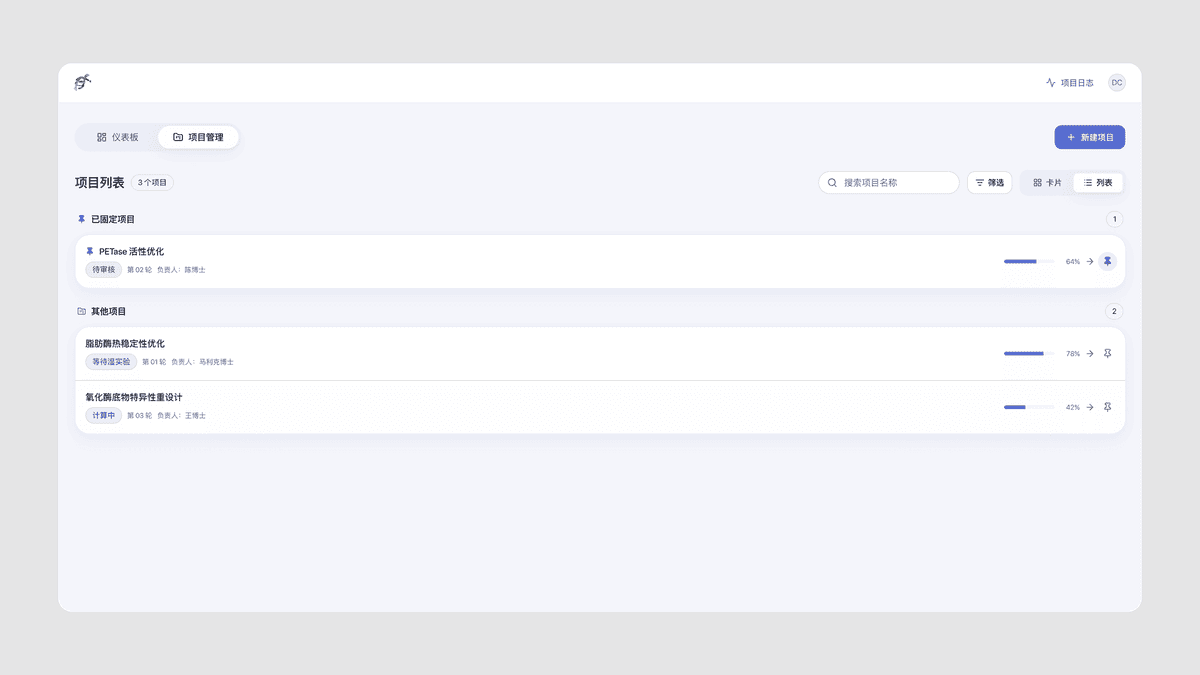
V2.0 repositions the product around a different idea: protein design should be managed as a traceable project loop rather than a sequence of disconnected computational tasks.
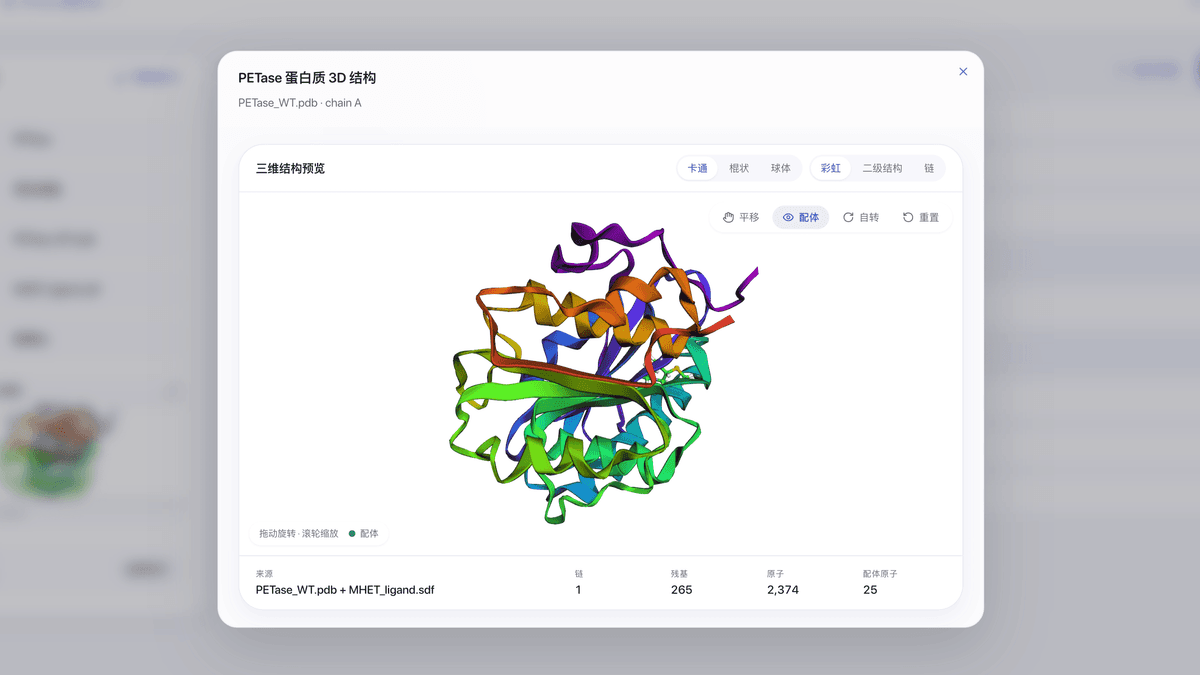
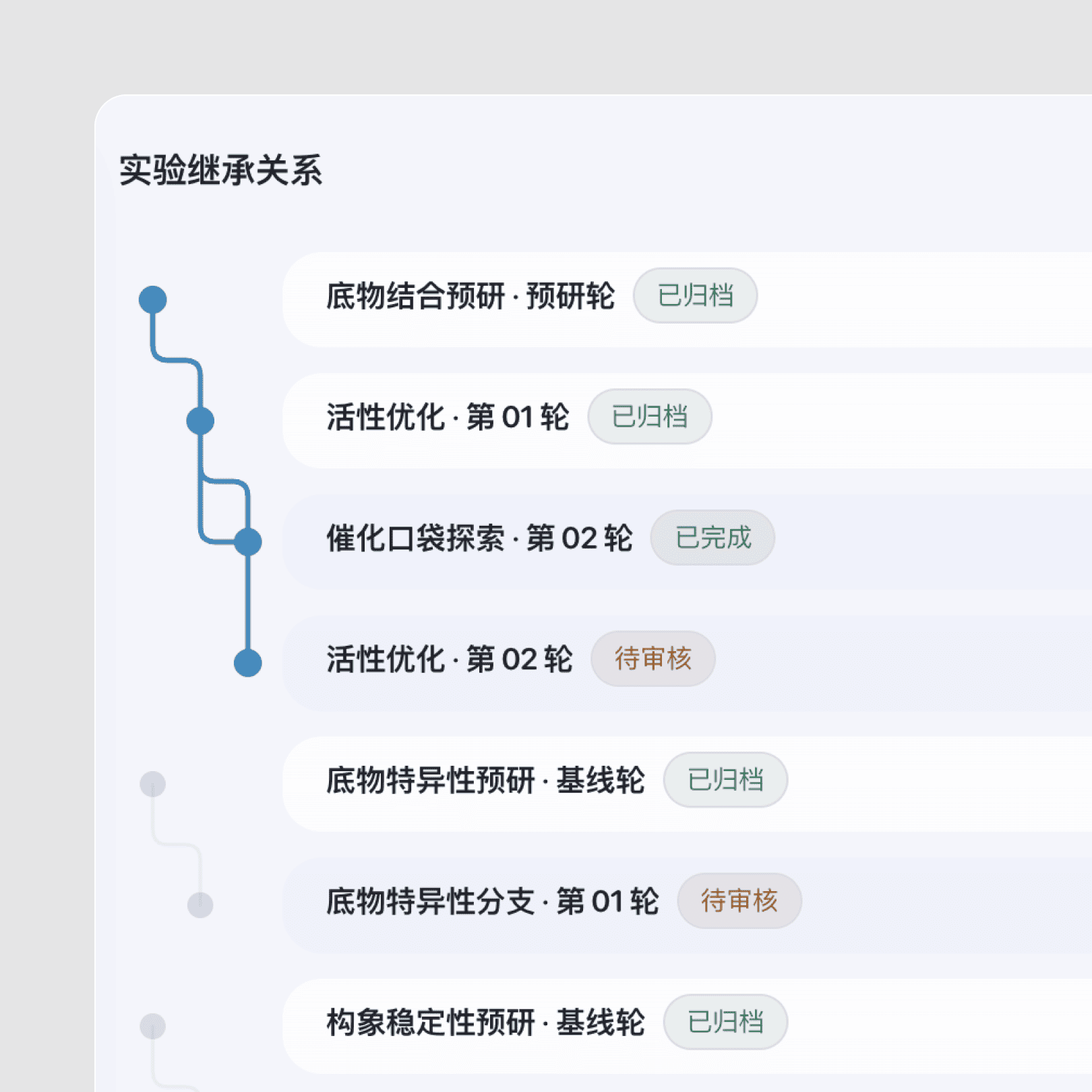
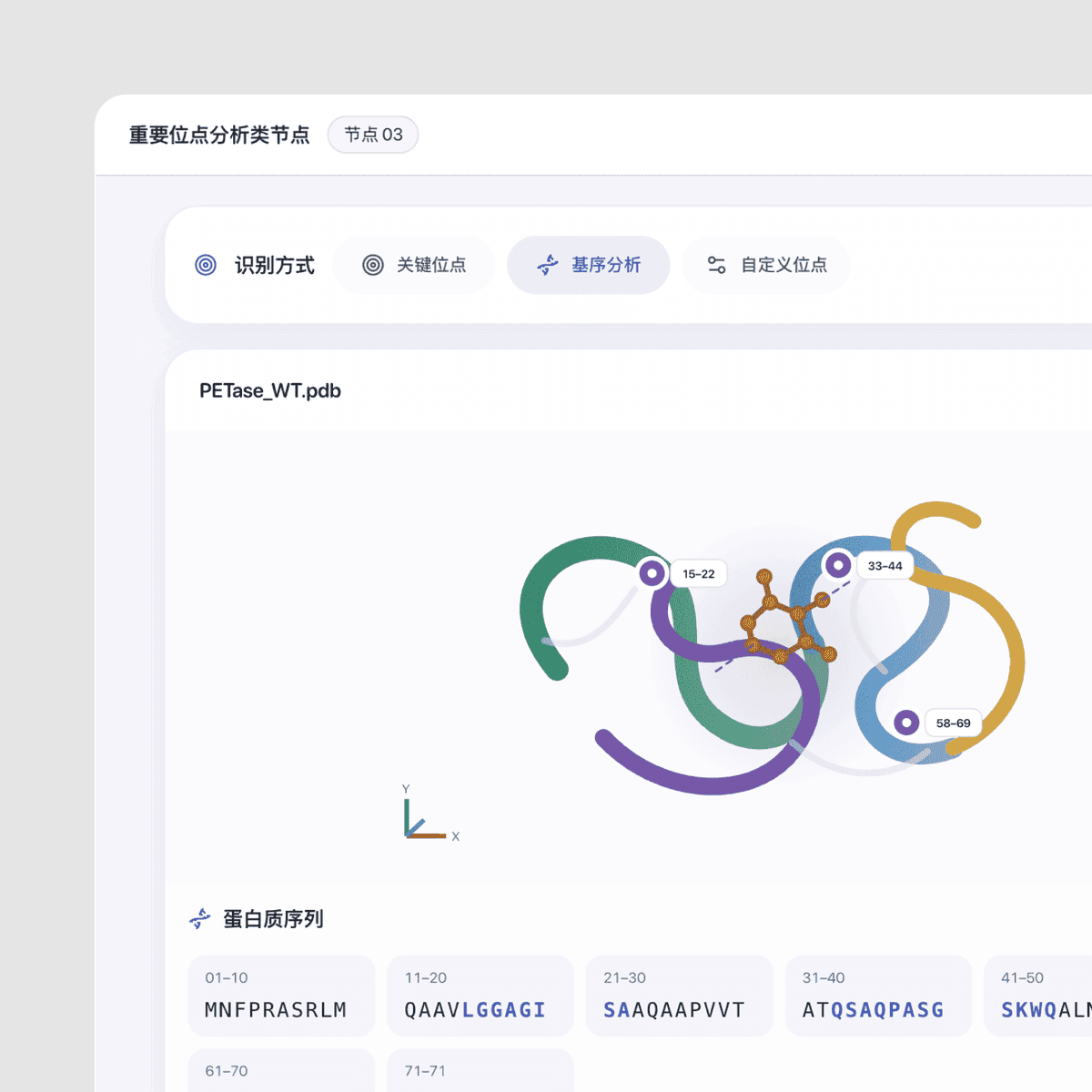
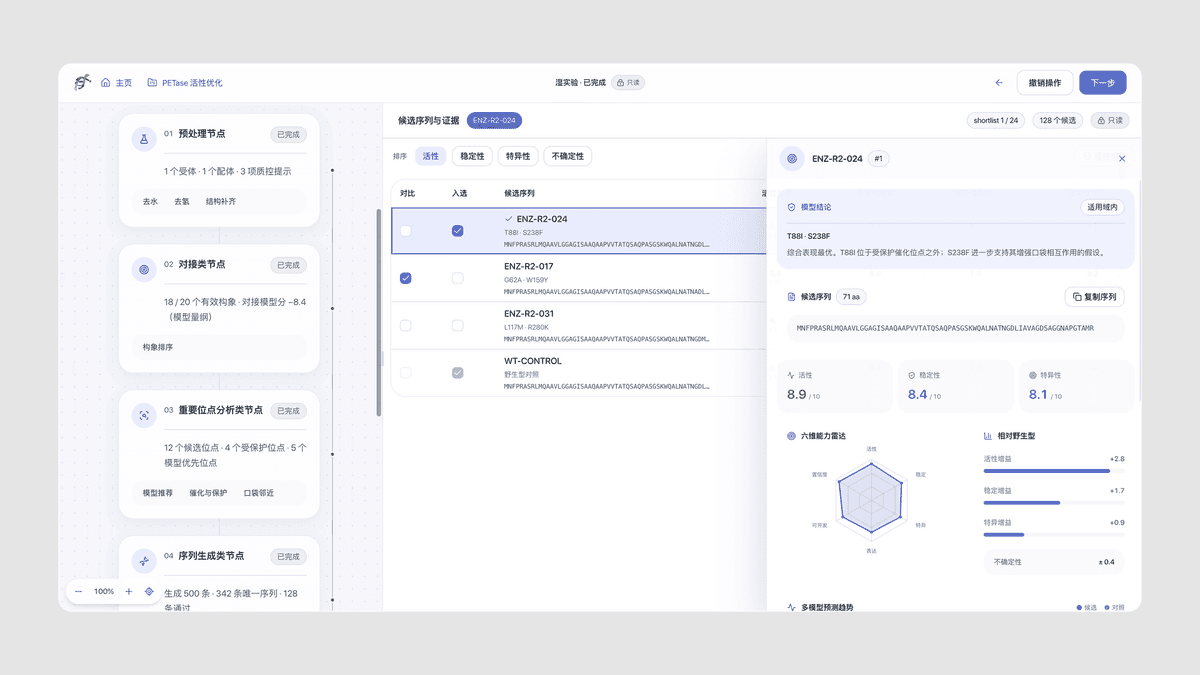
Instead of hiding computation behind a black-box workflow, the new experience makes project stages, model outputs, evidence, uncertainty, and failure states visible throughout the process. Design rounds and experiment branches remain connected to their original project inputs, while candidate evaluation brings activity, stability, specificity, uncertainty, and recommendation rationale into a shared review context. Structural evidence, sequence regions, motifs, and important sites are also designed to be examined together rather than across fragmented tools.
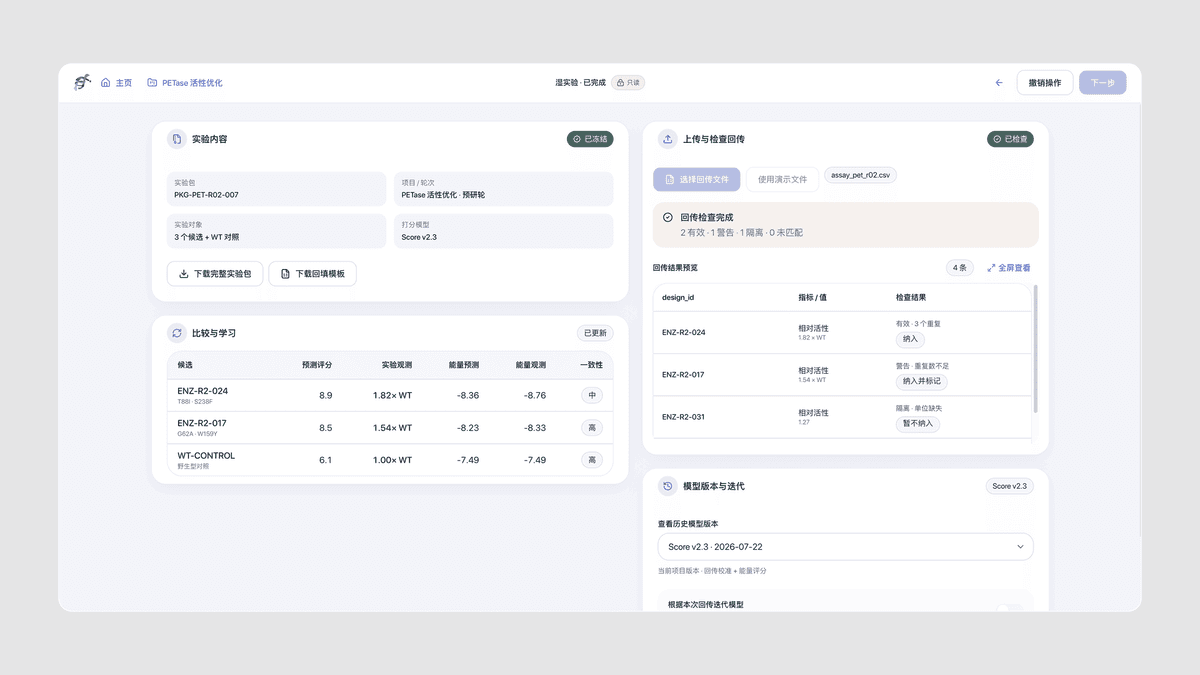
A key goal of the redesign was to make the system useful beyond the moment a model produces a result. Candidate selection is treated as the beginning of the next phase: preparing experiment packages, handing designs into wet-lab validation, and eventually feeding experimental results back into subsequent design rounds. This turns the product from a result-generation interface into a workspace for managing an evolving scientific process.
I led the complete product design and frontend rebuild for V2.0. Over an intensive three-day build, I restructured the information architecture, redesigned the core workflows, established a new visual and interaction system, and directed AI coding through the frontend implementation with continuous human review and iteration. Alongside the product redesign, I created a reusable design system for scientific evidence, status communication, filters, cards, tables, and workflow states.
The result is a calmer and more coherent product experience that makes complex protein design work easier to understand, review, and continue across computational and experimental stages.