CAMEL-AI started as a research outcome. At the beginning, the website mainly presented the project like an academic paper: technical, credible, but not yet easy for a wider developer audience to understand or join.
As the project grew, the website also had to evolve. It was no longer only a place to explain the framework. It needed to support early go-to-market, communicate our research strength, and eventually become a community-owned platform that developers and researchers could help build together.
Across four versions, I worked on the brand, website experience, content structure, and later led the rebuild from Webflow to a Next.js app.
Version 1 - Research paper as website
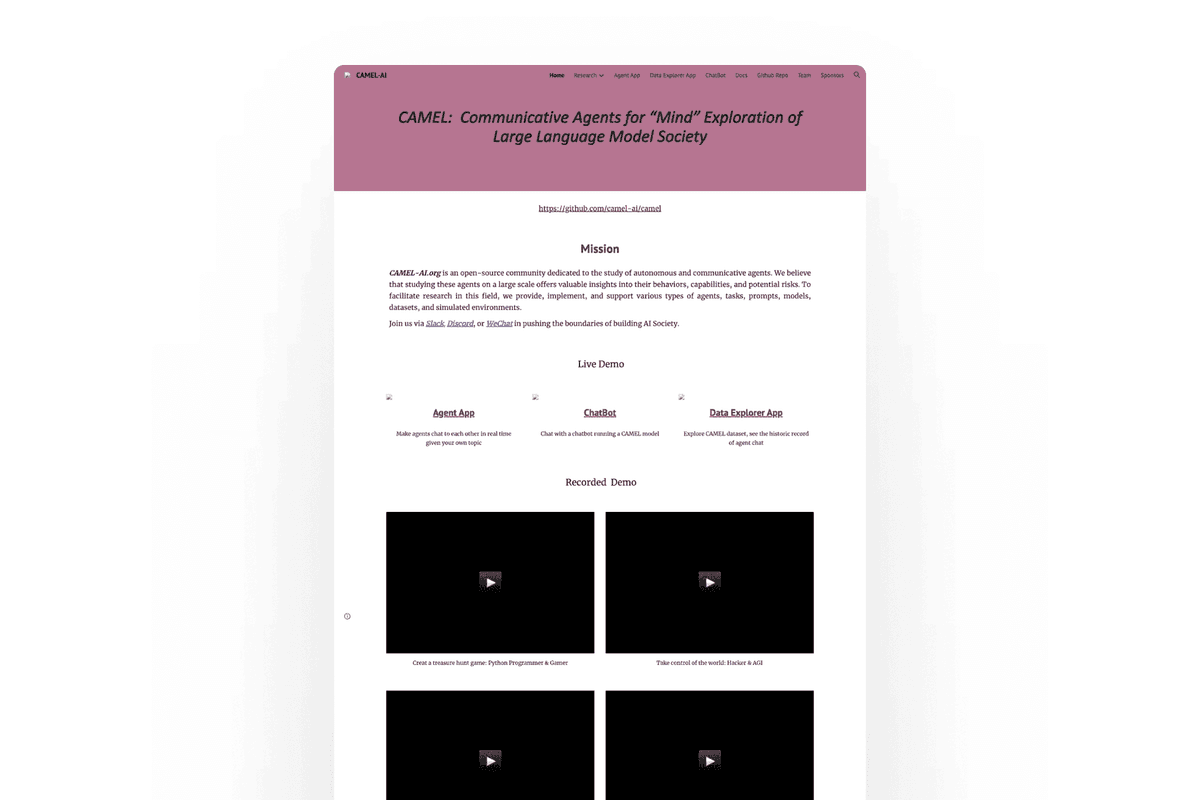
The first version of the website was close to the original research context. It helped explain the technical idea behind CAMEL-AI, but the experience still felt academic and paper-driven.
This was useful for credibility, but it created a gap for developers who were discovering the project for the first time. The site did not yet clearly answer: What is this framework? What can I build with it? How can I join the community?
At this stage, CAMEL-AI looked more like a research result than a public-facing developer product.
Version 2 - Turning the framework into a public product
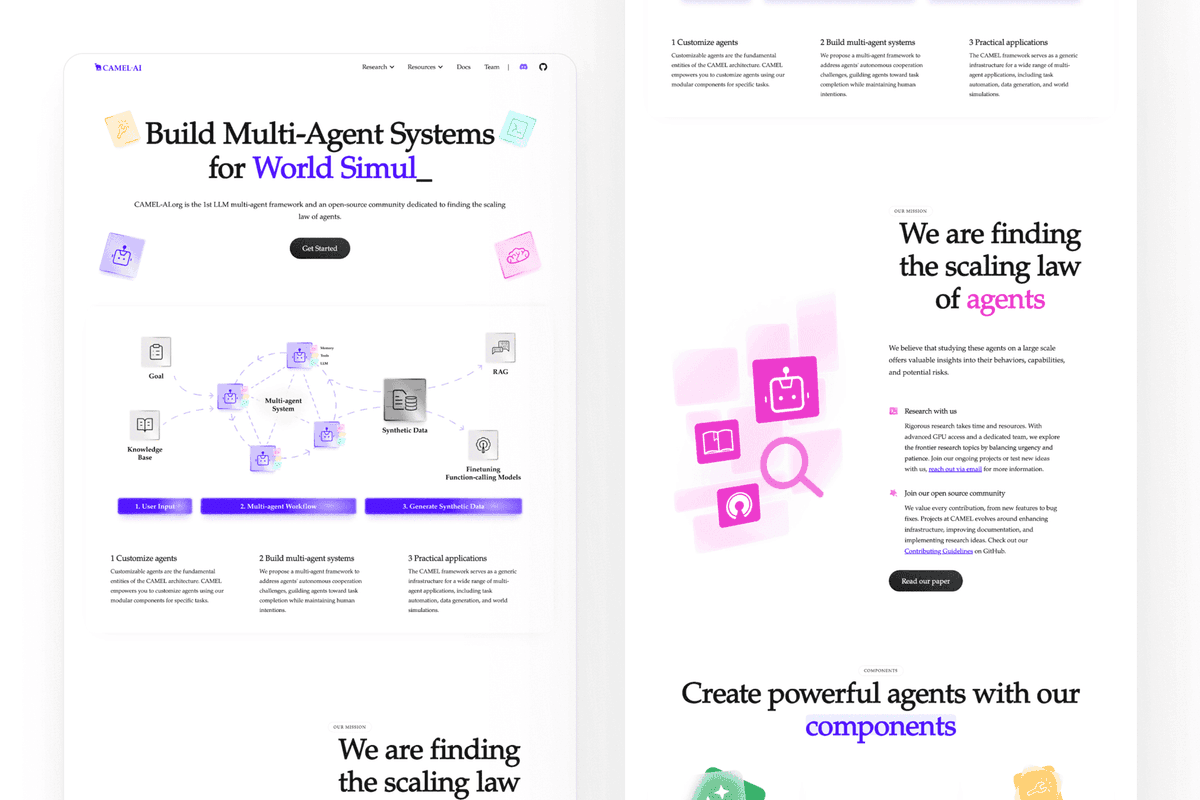
In the second version, we moved the website into Webflow and started shaping CAMEL-AI as a more visible product.
The goal was to introduce the framework to a broader audience, especially developers and early users. The website became more structured, more visual, and easier to understand outside the original research paper.
This version supported the early stage of go-to-market and community building. It helped us present CAMEL-AI not only as a technical framework, but as something people could explore, try, and follow.
Version 3 - Rebranding around our research strength
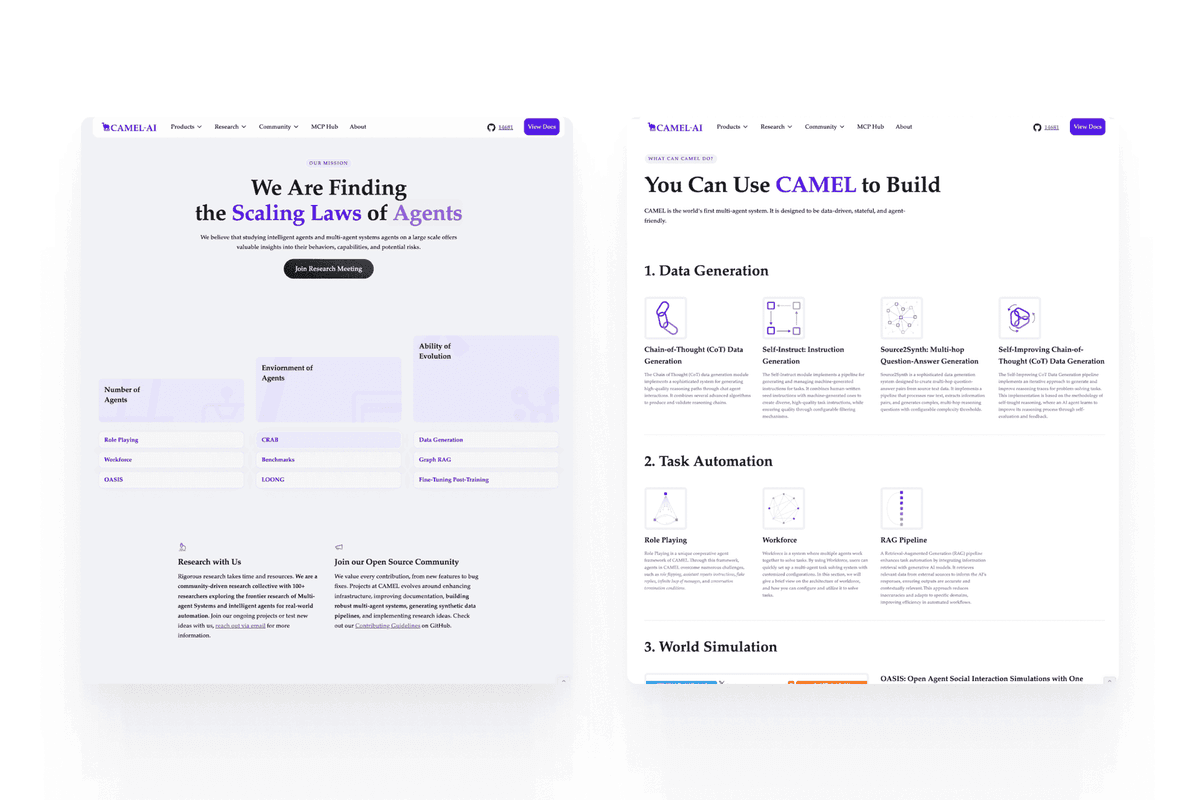
After CAMEL-AI entered a more competitive market, we realized that our strongest differentiation was not simply being another AI framework. Our strongest standpoint was the research community behind the project.
Many competitors were positioning themselves around product speed, tooling, or general AI agents. CAMEL-AI's unique strength was its academic foundation, research credibility, and collaboration with researchers.
So in Version 3, we shifted the brand direction again. The website became more research-driven and academic-focused, while still staying accessible to developers.
This helped us communicate a clearer position: CAMEL-AI is not only a framework, but a research-led open-source community exploring the future of multi-agent systems.
Version 4 - Rebuilding as an open-source community platform
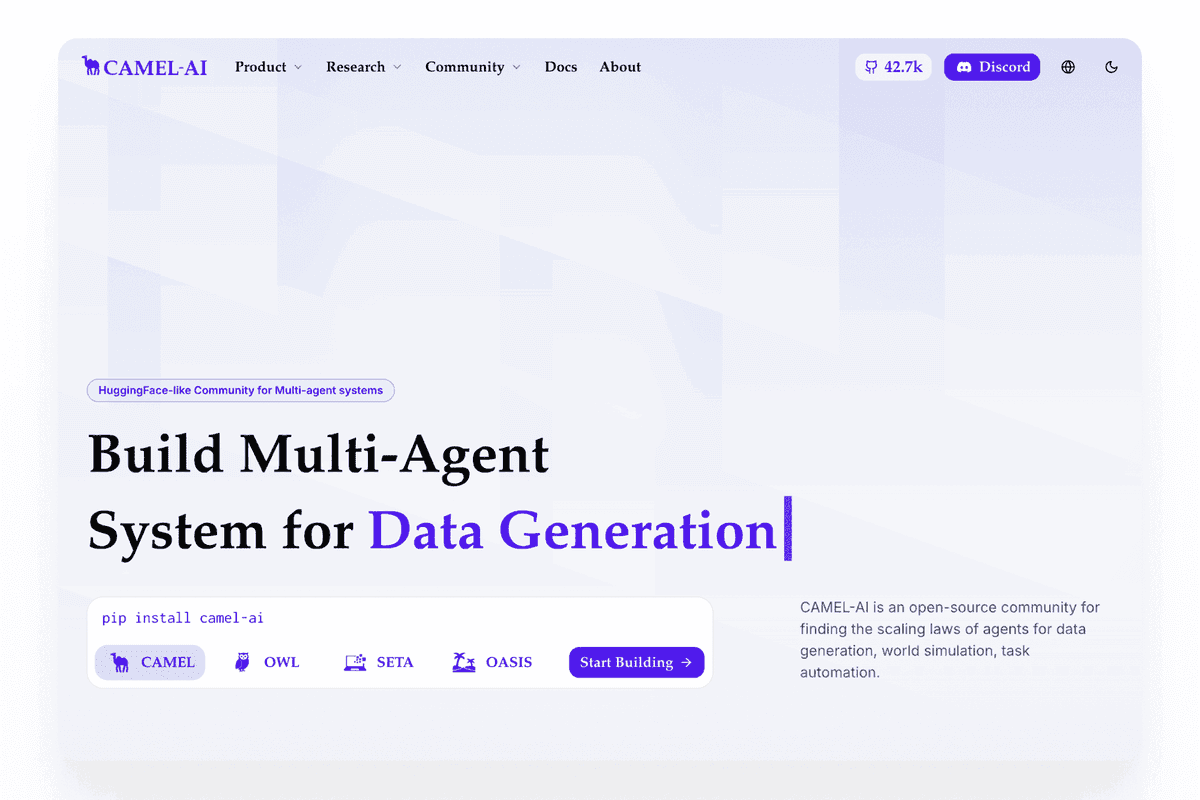
The fourth version became the most important step. I led the rebuild of the website from Webflow to a Next.js app.
This was not only a technical migration. It changed the role of the website.
Before, the website was mostly managed internally. After the rebuild, it became infrastructure that the community could help co-build, maintain, and expand with us.
This was important because CAMEL-AI was no longer only publishing one framework. More projects were being co-authored with researchers, and the website needed to support a growing ecosystem of research, community updates, documentation, blogs, and future launches.
In this version, I worked on:
- Rebuilding the brand design system from scratch
- Moving the website from Webflow to Next.js
- Creating a more scalable content structure
- Supporting light mode and dark mode
- Adding multilingual support
- Designing visual animations
- Making blog and community content more SEO-friendly
- Setting up contributor guidelines for community collaboration
The website became more than a marketing page. It became a foundation for a more open and engaging developer community.
Reflection
Looking back, the main challenge was not simply redesigning a website. It was helping CAMEL-AI grow from a research outcome into a public, research-led, open-source community.
Each version responded to a different stage of the project:
- Version 1 explained the research.
- Version 2 made the framework publicly visible.
- Version 3 clarified our research-driven positioning.
- Version 4 turned the website into open-source community infrastructure.
This evolution helped CAMEL-AI communicate its credibility, support community growth, and create a more scalable foundation for future research and developer collaboration.
Today, with 35K GitHub stars and 60K+ community members, the website plays a key role in how people understand, trust, and join the CAMEL-AI ecosystem.